
Nobody at Manchester's Shopify meetup sells software. I went anyway, because online shops are two years ahead of B2B SaaS on the question that is now ours: when a buyer asks an AI assistant what to buy, how does it decide? The short answer from the room: it reads your product data, not your design, and most of what it trusts is written by other people.
On Thursday afternoon I sat near the back of Social Refuge in Ancoats with around sixty people who sell things in boxes. Successify is Manchester's Shopify meetup, run by the agency Pixelkicks, now part of the PushON group. This was the fourth one.
I run a design agency for B2B SaaS companies that can count their customers. Nobody in that room sells software. I went because online shops are about two years ahead of B2B on a question that is now ours: when a buyer asks an AI assistant what to buy, how does the assistant decide?
Alex Duthie of PushON ended his talk with the line I brought home.
"Product data is no longer the stockroom. It's the shop window."
Everything below is that sentence, translated for a company with a few hundred potential customers.


How does an AI assistant decide what to recommend?
Alex's answer had four parts, and I have not found a better list.
Complete. The assistant reads your product feed, your pages, retailer listings, reviews and Reddit before it decides whether to show you. Shopify fills in title, description, price and stock by default. Everything that makes a product right for a specific person, the fit, the ingredients, what it works with, has to be added by hand.
Consistent. He showed the same Bosch washing machine on three retail sites. One said a 9kg drum in the specs and "up to 7kg" in the description. A buyer might not notice. An assistant comparing hundreds of listings does, and it trusts you a little less.
Context. A client of his sells nuts and bolts, and the product page says "2mm bolt". Nobody asks an assistant for a 2mm bolt. They ask for a bolt for a dishwasher door. If the page never says what the bolt is for, it never gets recommended.
Credible. Most product citations in AI answers come from third-party content, not from the brand's own site. On his slide the figure was 91 per cent.
Most software product pages are the 2mm bolt: a list of features, a screenshot, "book a demo". They rarely say what the product is for, who it is not for, what it sits alongside or what it costs. If your pages never say those things in plain words, the assistant cannot say them either.

Can an AI assistant read your website?
Only if the words are in plain HTML. If they appear once a script runs, the assistant never sees them.
Alex showed two product pages with JavaScript switched off, which is roughly what an AI crawler sees. ASOS: a title and one image. Price, sizes, stock and details had all vanished. REI, the American outdoor retailer: everything. Specs, warmth ratings, reviews, customer photos. That is the page the assistant recommends. Adobe has a free Chrome extension that scores a page on this.
B2B SaaS websites are built in React, Webflow and Framer with tabbed feature sections, accordions and animated reveals. My honest guess is that most pricing pages fail this test, and I include pages we have designed. It is a ten-minute check and it should be the first thing you do after reading this.
Hannah Johnson from Shopify put it another way: the platform gets a merchant eighty per cent of the way into the AI channels by default, and the merchant does the other twenty. Your website builder gives you the same eighty. Nobody is coming to do the twenty for you.

How many reviews does it take to be cited by an AI assistant?
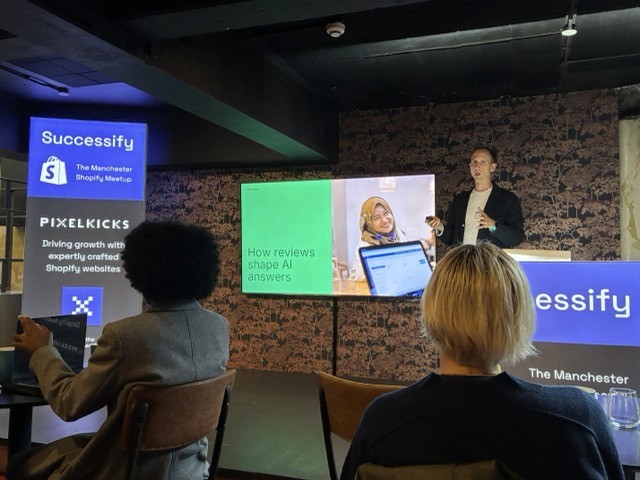
Thirteen. That was the number from Graham Wilkinson of Trustpilot, who opened the day, and it made the room go quiet.
Trustpilot commissioned an independent study of more than 800,000 AI answers across about 2,000 brands. A brand with no reviews was cited in about one per cent of relevant answers. With thirteen reviews, 54 per cent. With eighty-one, 75 per cent. And the closer the question sat to a purchase, the more the answer leaned on review content rather than the brand's own pages.
He also told the Ryanair story. Their Trustpilot score is 1.2 out of 5, and they told Trustpilot that was exactly what they wanted, because a better score would raise expectations they had no intention of meeting. It got a laugh, but it is a positioning lesson. They know what they are, and the reviews agree with them.
Here is the B2B translation. If your whole market is 300 accounts, thirteen public reviews is four per cent of your buyers vouching for you in the place the assistant actually reads. That is not a volume game. It is a list with names on it, and you already know the names. G2 and Capterra matter, but so does the named customer on LinkedIn and the case study on someone else's site. And answer the bad ones. A complaint with a visible resolution is a credibility signal. A complaint left alone is the opposite.
Why does the list you own matter when ads cost ten times what they did?
Because the audience you own is the only channel nobody can reprice.
Max Rodman of REP stepped in the night before when a speaker dropped out, and his talk was the one I keep thinking about. He and his brother have run a personalised-gifts business for ten years. In 2017 a Facebook ad brought in a customer for 50p to £1. The same customer now costs £8 to £10. So he asked what they would do if ads stopped tomorrow, and put eighteen months into email. It went from two per cent of revenue to twenty.
His new brand, REP, is a protein shake with five ingredients, on a shelf in Ancoats next to companies that have been bought for a billion pounds. His answer to competing with that budget: show everything behind the scenes that a big brand cannot. He has posted every day for 330 days, and had a thousand sign-ups before launch with no product to sell.
In a countable market this is not a parallel. It is the same thing. You cannot buy your way to the same 300 accounts every quarter at rising prices. The list of named people who hear from you directly, and chose to, is the market. Everything else rents it back to you.
What should a B2B SaaS company measure for AI visibility?
Four numbers, from Alex's slide headed "The numbers for a new channel", with the warning that you cannot run this on traditional SEO tools alone.
AI visibility rate. For your target prompts, how often do you appear out of every ten answers, against your competitors?
Citation quality. A text mention with no link is the weakest. A direct link is better. A product card with price, stock and reviews is the one you want.
AI-referred traffic and conversion. Google Analytics 4 already groups this as an AI referral channel. Small today, growing month on month across every client he has.
Data completeness. Pull your top products into a spreadsheet and score what is missing.
Use a tool (his slide listed Profound, Otterly, Peec AI and Scrunch) rather than your own ChatGPT window, which is biased by your history. We run a logged-out prompt set for the same reason, and the leak is almost never where the founder thinks it is.
On how much this is worth, the room did not agree on the multiple. Hannah's Shopify data has orders from agentic channels converting about 42 per cent higher than the rest. Ben McKay of Voxelo had AI search traffic at two to three times better converting. The direction was the same from every chair.
Why does an AI assistant need one source of truth for your product claims?
Because it compares every version of your product it can find, and contradictions cost you the recommendation.
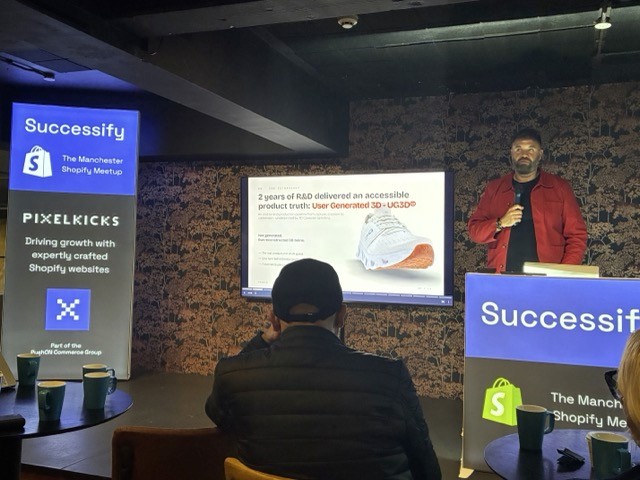
Ben's company, Voxelo, builds photoreal 3D twins of products from a phone video in under an hour. The line he kept returning to: it is a reconstruction of the real product, not a generated one. Prompting an image model gives you a plausible product rather than the actual product, and in e-commerce a plausible product is a return. Most product pages, he said, carry twelve to fourteen attributes, while the buyer's prompt carries months of context. The gap between those two is where the sale is lost.
The B2B version is familiar. The product truth is scattered across the website, the sales deck, the G2 listing and a doc the sales team keeps, and they disagree with each other the way those three Bosch listings did. One source, and everything generated from it, is the fix in both worlds.
What should a B2B SaaS founder do about this?
The shop window is the data on the page, not the design around it. Our job is to make sure the two are the same thing.
Switch JavaScript off and look at your pricing page. Do it today.
Thirteen reviews moved citation from one per cent to 54. In a market of 300, that is thirteen conversations you can name.
Say what the product is for and who it is not for. The 2mm bolt gets no recommendations.
Attention bought on ads costs ten times what it did. The list you own is the market.
One source of truth for product claims, in e-commerce and in software.
Pixelkicks runs Successify for free, and the fifth one will be worth your afternoon if you sell anything online.
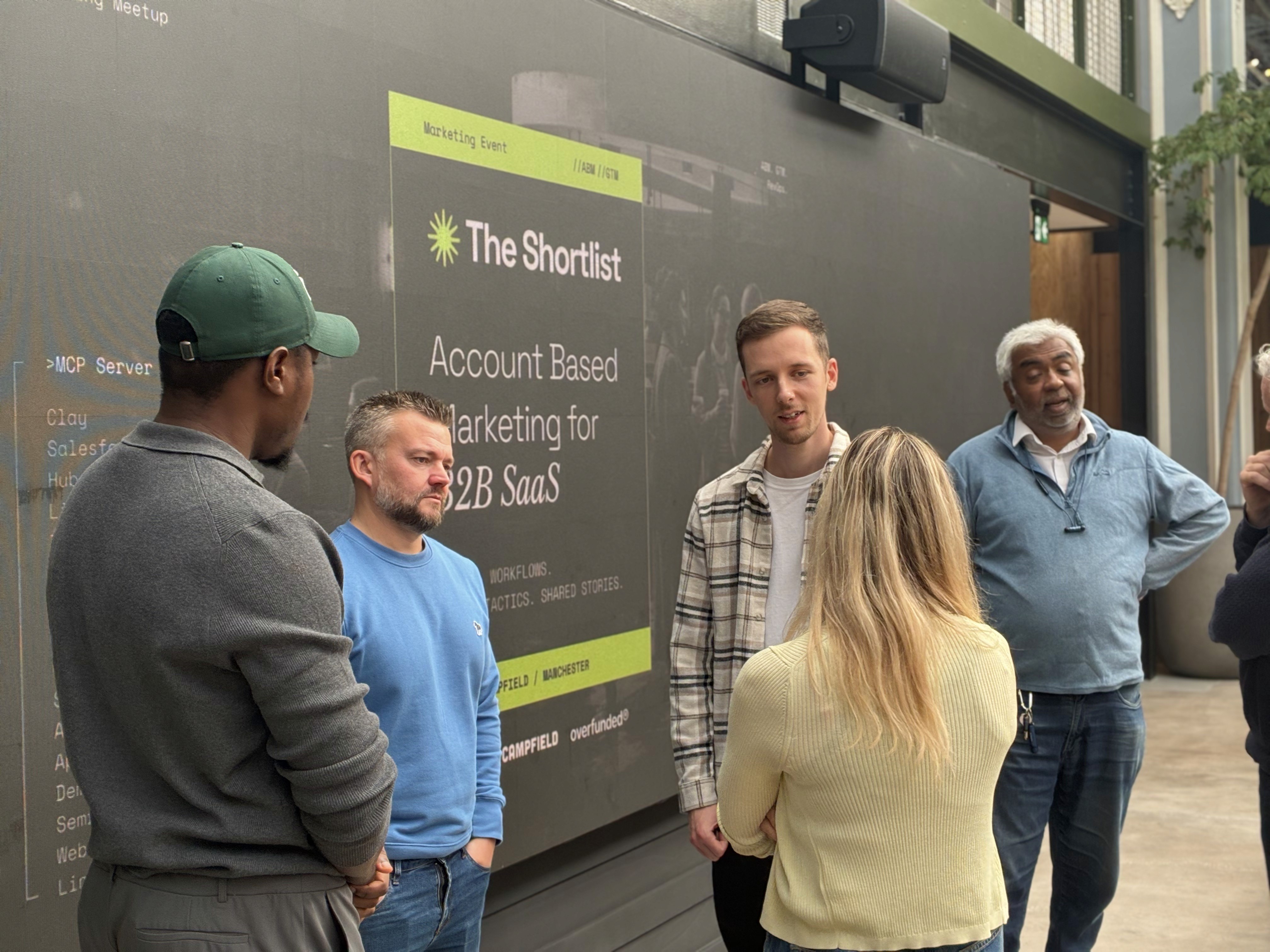
If the measuring part is where you are stuck, the November Shortlist is about exactly that. On 6 November at Campfield, Jonathan Catton, Head of Data and Insights at Hallam, walks through how his team brought their marketing data into one place an AI can actually reach. And if you want to know what the assistant says when your buyer asks about you, ask us and we will run the prompts.
Let’s keep in touch.
Discover more about high-performance web design. Follow us on Linkedin
