

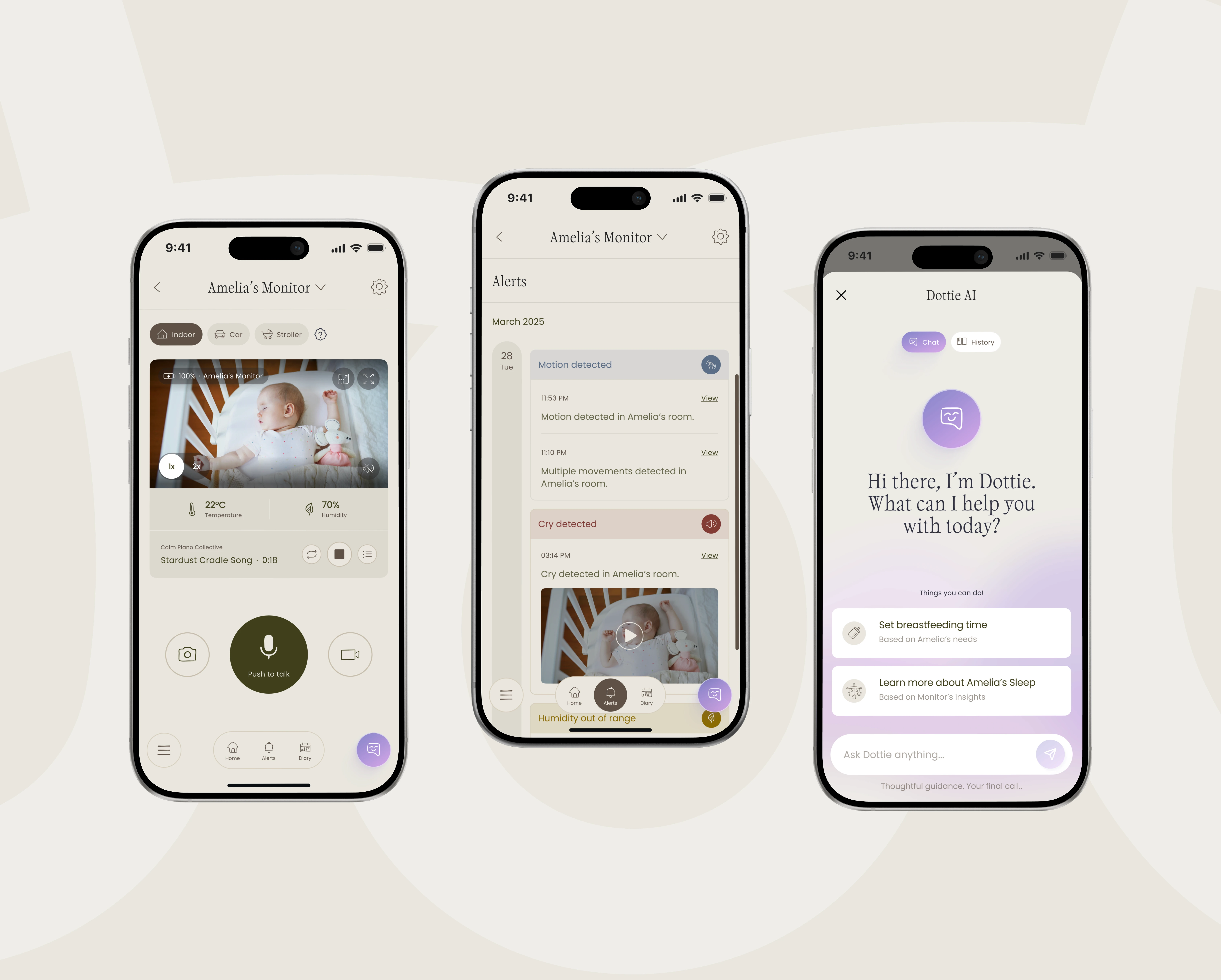
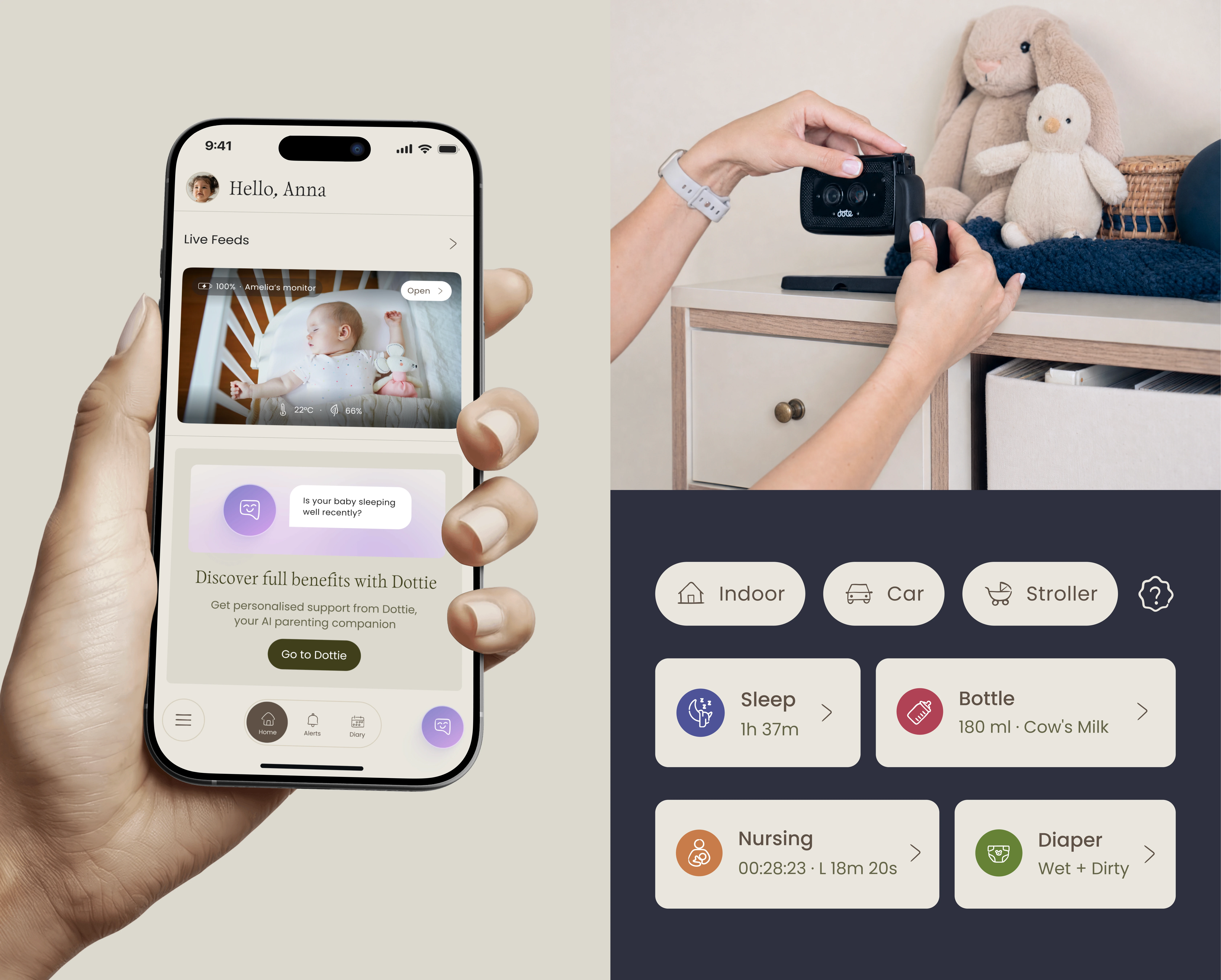
Dote initially asked us to design a handful of app screens, but as the conversation progressed it became clear that the product was significantly larger than the original scope suggested.
The team was working across a wide ecosystem of screens (monitor view, alerts, diary, helpers, onboarding, AI chat, multi-caregiver "villages") and needed a unified design system that could hold it all together without losing the warmth of the brand. They also needed to solve a category-specific problem: most baby monitor apps either over-alarm parents or bury critical information under generic dashboards. Dote wanted the opposite, an interface that reduces mental load, communicates clearly in high-stress moments, and feels like a calm, competent friend rather than an alarm system. Together the Dote team, we recognised that the first real challenge was not visual but structural. Before we could design effectively, we needed to organise the product itself: mapping every flow, grouping related screens, defining how sections connect, and deciding what belonged where. Once that information architecture was agreed, the work could move quickly. We shifted to a component-based system, reusing patterns and shipping new screens without sacrificing consistency. Establishing this way of working with Ste and his team, and the architecture beneath it, is what allowed everything that followed to scale.
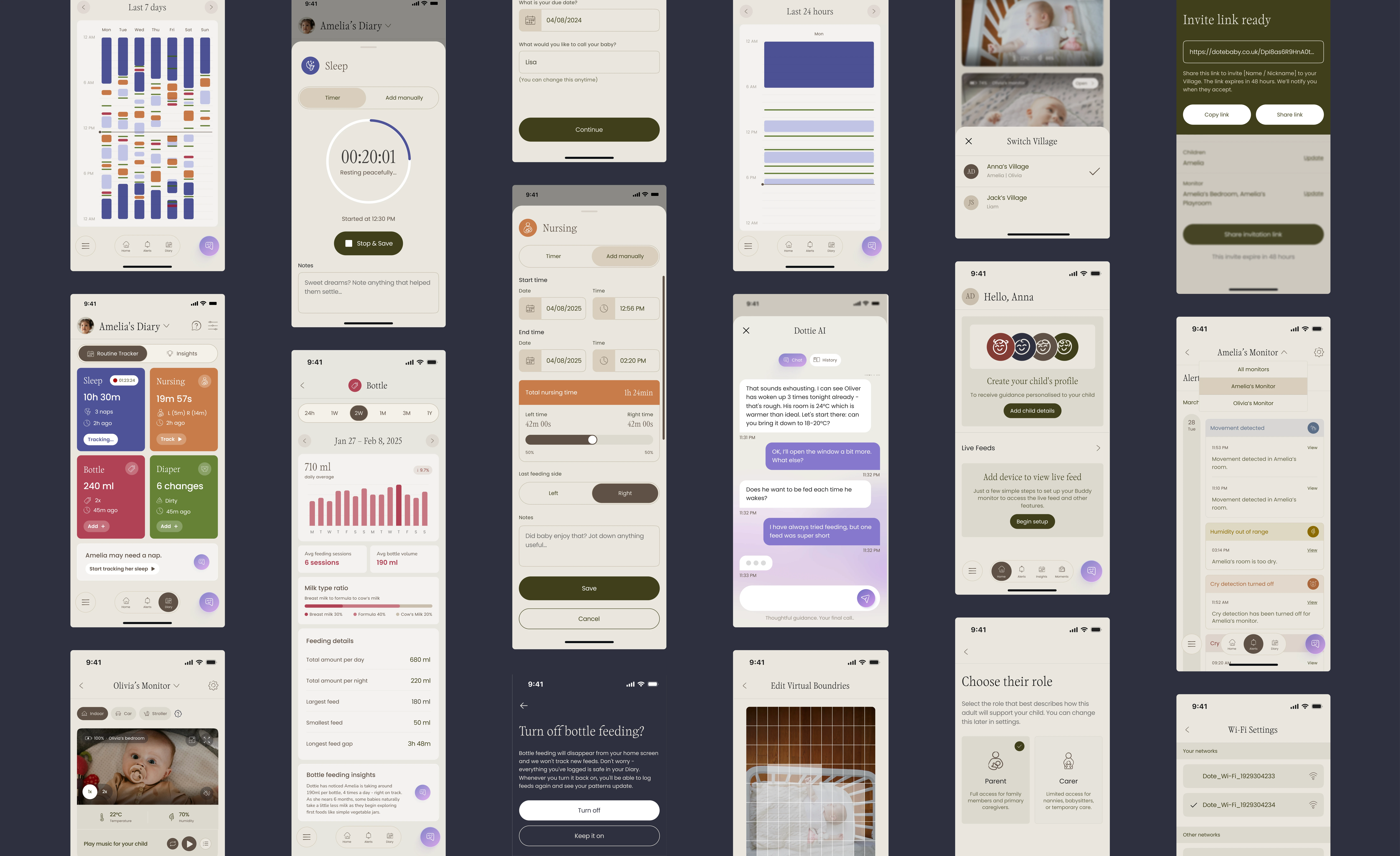
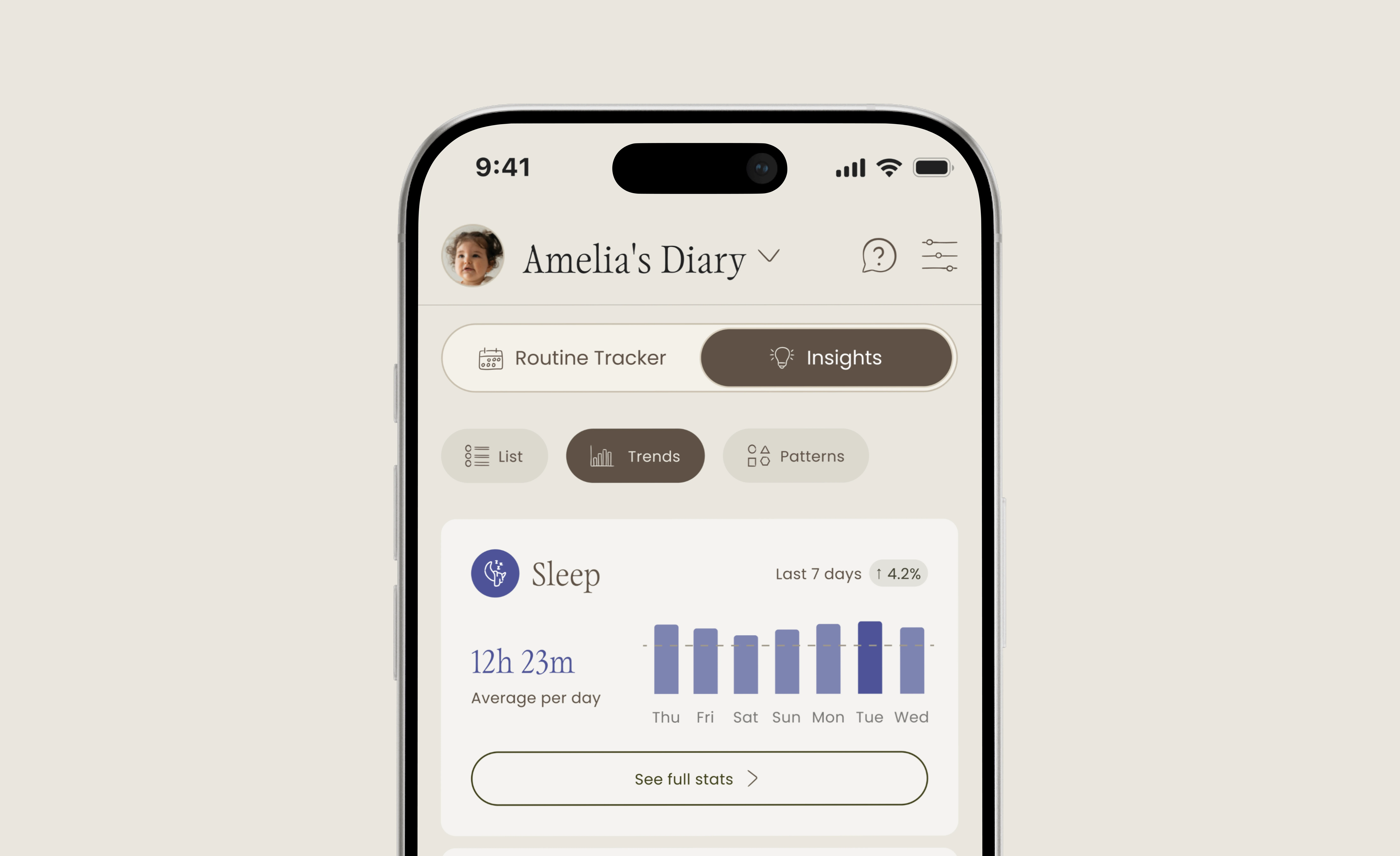
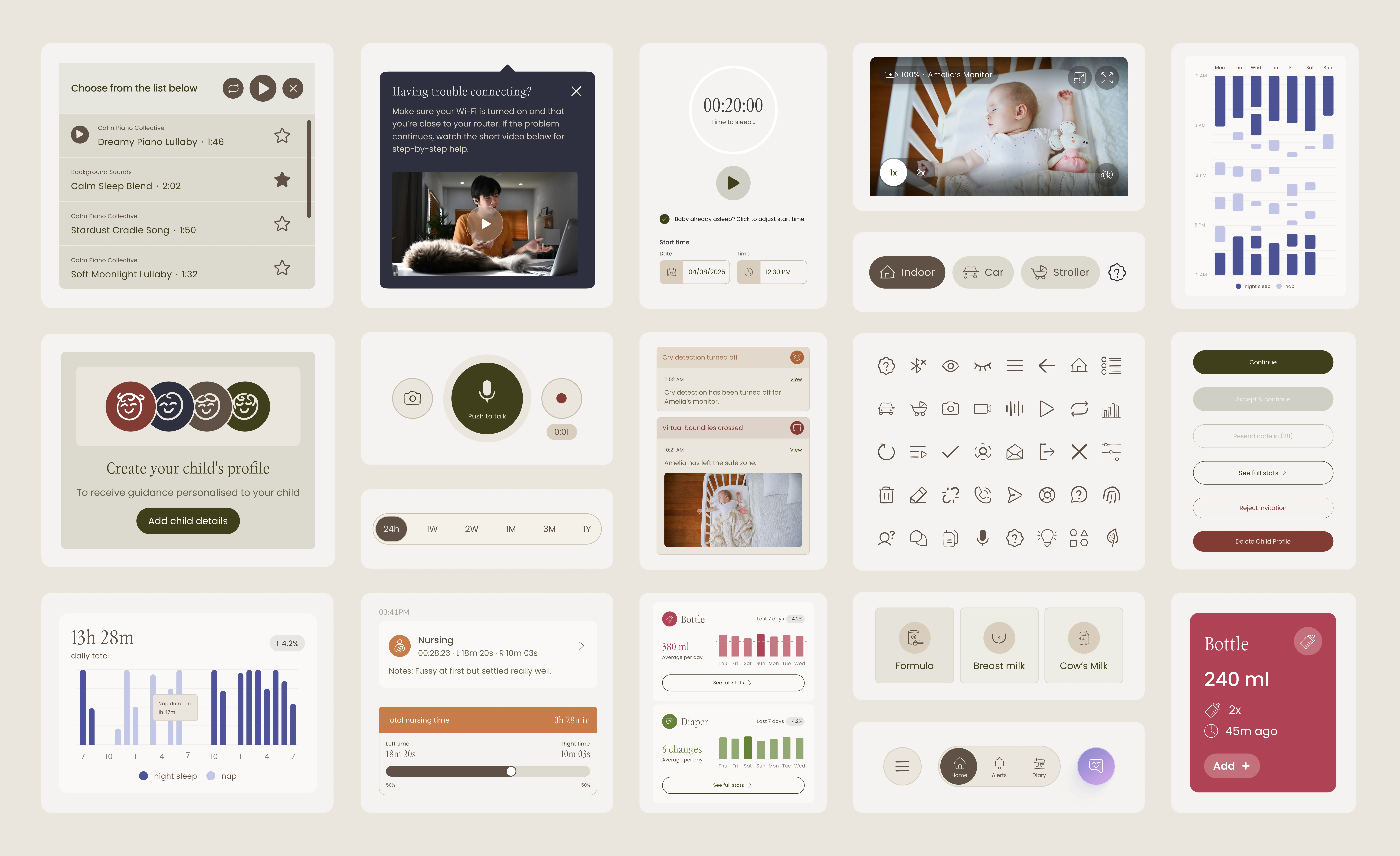
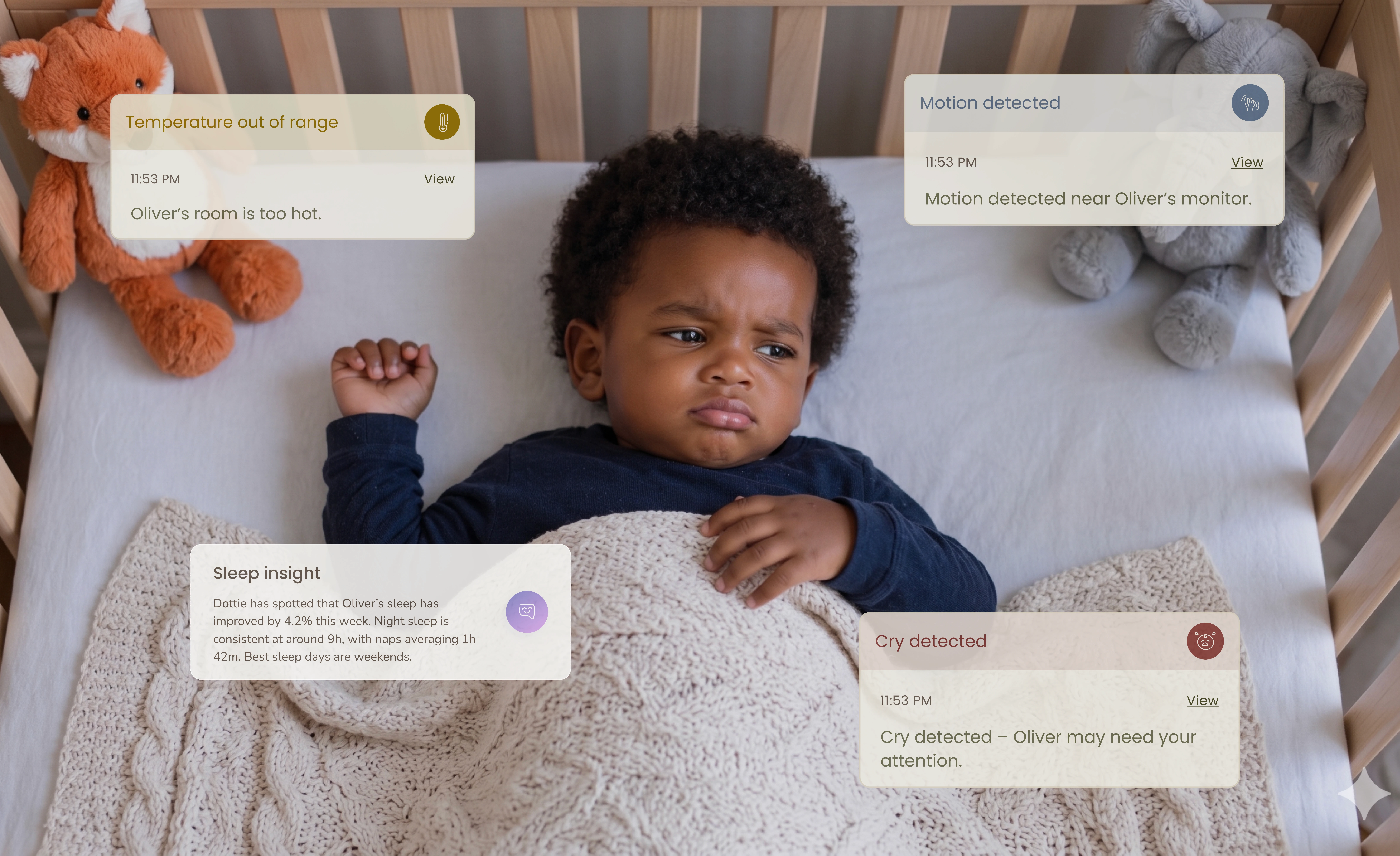
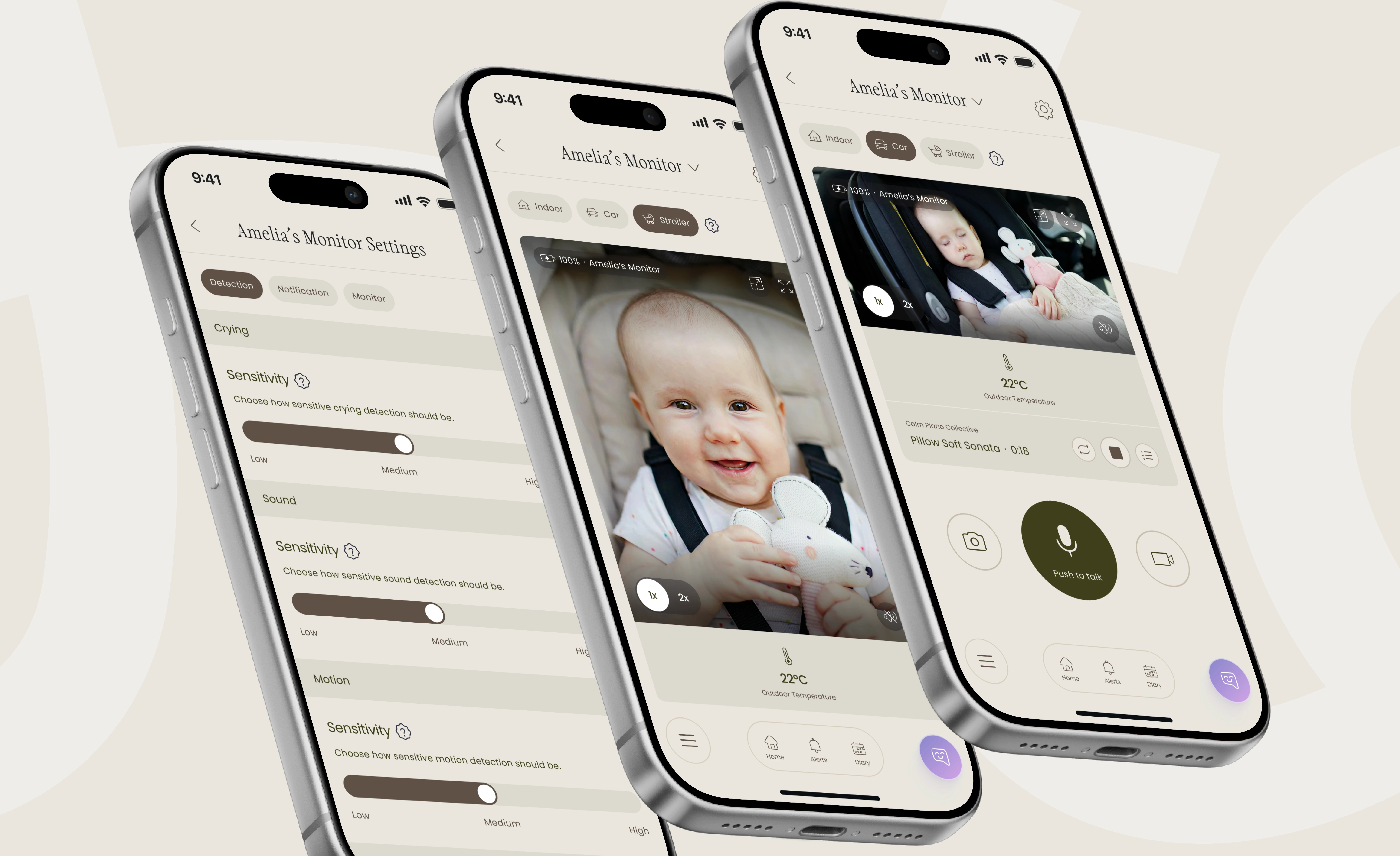
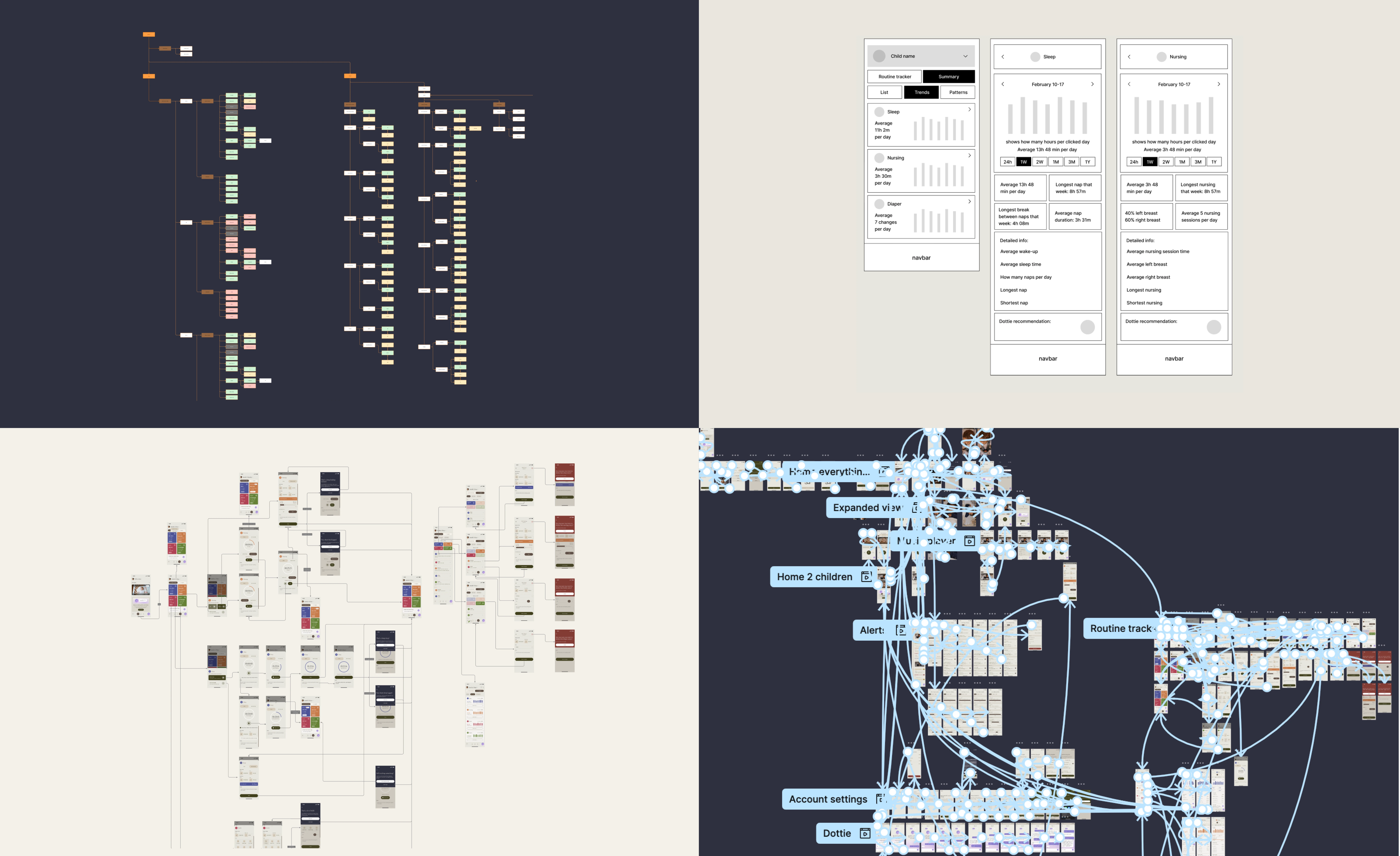
We partnered with Dote on a full UI/UX programme covering the core app experience, working closely with Ste throughout to shape direction and refine the details.
Much of what makes this product interesting is how much it actually does. Most baby monitors offer little more than a live feed. Dote combines a live monitor view with a full routine tracker covering sleep, feeds, timers, trends, and patterns, a detailed notifications system covering cry, sound, motion, and offline alerts, a diary with personalised tracking settings, a multi-caregiver "villages" model, and the Dottie AI assistant. All of it is filterable, interconnected, and held within a single calm, consistent interface. We designed and refined over forty product screens across these flows, defined the component library that holds them together, and developed a microcopy framework anchored in Dote's four voice pillars of reassuring, empowering, warm, and clear, so that every alert, empty state, and helper reads as the same brand. Alongside the core flows we also explored concept directions for newer surfaces such as the music player, switch-village, and home variant.
Testimionial Quote
Nova Chow
Technical Lead, Hardware & Software Development and AI Model @ Dote